Design - Bell Helicopter

helicopter

An important part of the design of a new helicopter is the flight test, where data is collected measuring the forces on different components of the helicopter. Before a helicopter design can be approved, one needs to know that the design can withstand these forces over the expected lifetime of the helicopter. A physical stress test is costly and time consuming, and it can only apply about a half-dozen forces. Therefore it is essential to choose the correct forces from the flight test, which will then be applied in the physical stress tests. The correct forces are the extreme (i.e., most important) forces in directions that cause wear and tear. Choosing these forces is difficult, since millions of data points are measured during the flight test and the data points are in high dimensions.

The testing team uses expert knowledge to determine which points are likely to be important. Data reduction is required, however. Our team hoped to find a blind data reduction method that would agree with the points found using expert knowledge. A research team consisting of a professor, postdoctoral fellows, undergraduate students, and graduate students worked with the team from Bell Helicopter using ideas from convex analysis and computational mathematics to find the required extreme points. The results of the blind algorithm agreed with the results provided by expert knowledge. The results were used in time to go ahead with the physical stress testing on a new model of helicopter.

Energy - Hydro-Québec

HydroTowers

A few years ago, Jean-Claude Rizzi and Guy Vanier from the Hydro-Québec/TransÉnergie Research Institute were designing a method for optimizing dynamic transfer limits in a high-tension electrical network. Joining the Montreal Industrial Problem Solving workshop allowed these researchers, with the help of Dr. Michel Gendreau and some students, to build an abstract model of the problem and find optimization methods for solving it. At the end of the week a heuristic algorithm had been proposed and two of the students were already working on its implementation. They were interested in pursuing their work and delivered a prototype of the required software. The solution implemented at TransÉnergie grew directly out of this prototype and is now a basic tool for the engineers designing the network exploitation strategies. The workshop enabled the Hydro-Québec researchers to make rapid progress in their work and have stimulating exchanges with academic researchers, in a relaxed atmosphere. The IPSW experience was for them as useful as it was pleasant.

Quantum gate design

Qgate

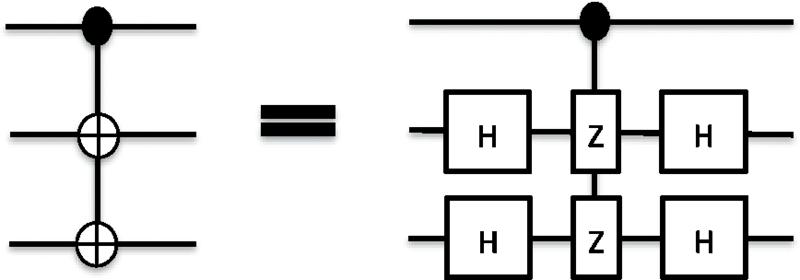
The heart of a quantum computer is a simple quantum gate that has several inputs and outputs controlling a certain number of basic quanta of information known as qubits. The research group at the Institute for Quantum Science and Technology, led by Dr. Barry Sanders at the University of Calgary had developed a novel machine learning method, known as Subspace-selective Self-adaptive Differential Evolution, for creating the optimal design of a three qubit gate. Extending this to more qubits is a major computational challenge, which the group presented as a problem at the 2015 PIMS Industrial Problem Solving Workshop held at the University of Saskatchewan. A four qubit design leads to a hard optimization problem in \(4^4 = 256\) dimensions. A mathematical re-formulation of the design problem led to an algorithmically simpler feasible region problem. The result is a computationally efficient algorithm that solves the design in a matter of hours of compute time, rather than weeks or months.

Oil & Gas - DAS

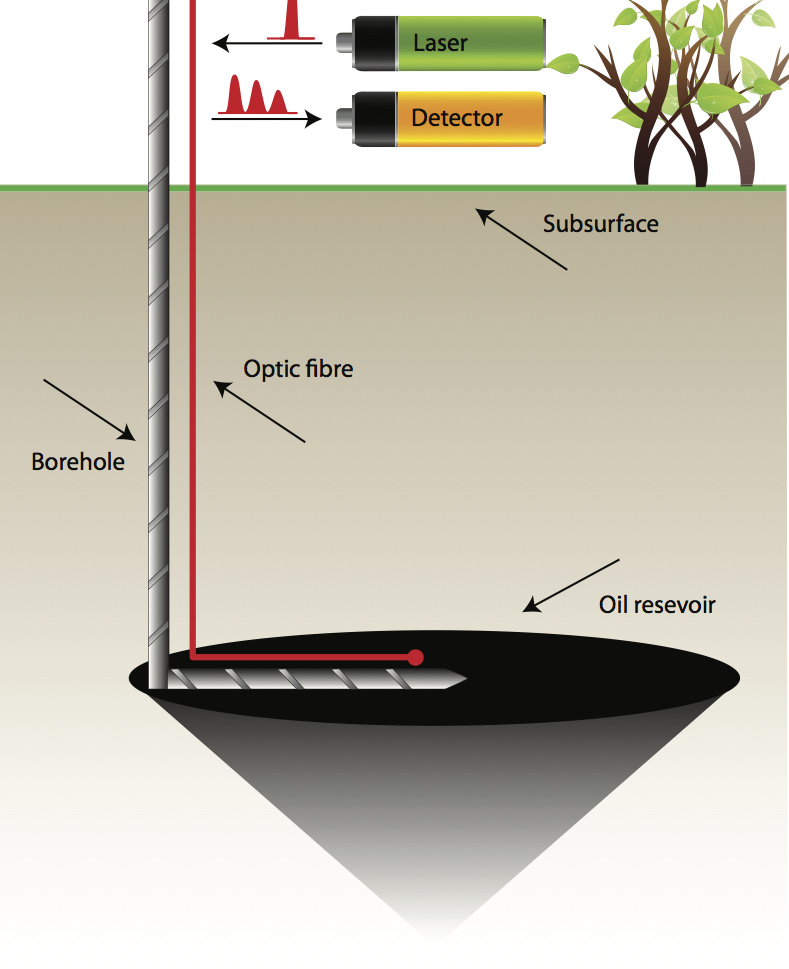
In current oil recovery technologies, fluid flow and fracturing processes can be monitored with novel distributed acoustic sensing (DAS) devices built on fibre optic cables that are embedded in a bore hole and interrogated with a sophisticated laser emitter and detector system. The 2015 IPSW problem presented for study by researchers at Fotech Inc. was to determine how single-component sensor data can be used to provide information about fracture hypocentres. Travel time, Eikonal equations, and least squares modelling of the data are all used to improve the resolution of the sensing equipment.

This research collaboration has developed into an NSERC-funded internship, applying novel signal processing algorithms to other DAS applications in monitoring linear assets in the field.

Mining - Scheduling Ops

PotashMine

Managing a network of mines is a complex operation, each mine with its own unique character, producing a range of products at various capacities, with varying amounts of space for on-site inventory storage, often with processing facilities to refine products, and with unique transportation access and costs.

The Potash Corporation, headquarted in the Province of Saskatchewan, has mines at locations around the world and supplies a global market for fertilizer and crop nutrients that are essential in modern agriculture.

Scheduling of shut-downs and starts-up of each potash mine, and a variety of labour and fiscal constraints, can be a key step in determining the network operations. Ultimately the goal of a commercial mining operation is to maximize profits over a sustained period of time, taking into consideration the constraints of operation while responding to opportunities in the marketplace. The researchers at Potash Corp presented a challege to the participants of the 2015 PIMS Industrial Problem Solving Workshop, to come up with an effective software algorithm to aid in optimizing the operations of the mines. A key improvement was to provide feedback to the operators on how to adjust the algorithm on the fly, to provide useful and reliable results for real operations over a sustained period.

Manufacturing - Michelin

helicopter

The Michelin Tire Company requires the tires it produces to be very uniform in order to provide a quiet, smooth ride for the automotive consumer. The more uniform the tire, the quieter the ride and the more comfortable the road experience. A modern automobile tire is constructed from twenty or more layers of materials including an air-tight inner seal, layers of rubber, cords and steel belts, bonding agents and finally a surface tread to complete the assembly. The optimal alignment of layers and bonding components is critical to the performance of the assembled tire.

At a PIMS Industrial Problem Solving Workshop in Calgary, Alberta, Michelin presented the problem of designing a rigorous testing procedure to guide the construction and analysis of their tires to ensure the optimal layering of components to give a uniform tire. With a team of mathematicians and statisticians, a successful testing protocol was devised using advanced techniques in harmonical analysis, statistical experimental design, and Monte Carlo simulation. A second workshop at UBC extended the testing procedures to include the method of Good Lattice Points, accounting for non-harmonic frequency components in the tire non-uniformity, and optimally reducing select frequencies that have a marked effect on consumer comfort experience.

The company implemented this novel testing procedure into their factories and reported savings in the hundreds of thousands of dollars per year.


Let's Connect!


Ready to explore a collaboration? Give us a call or send us an email and we will get back to you as soon as possible.

+1 604 822 3922